
NextNRG and Florida International University advance wireless, bi-directional EV charging in Miami
ExecSum
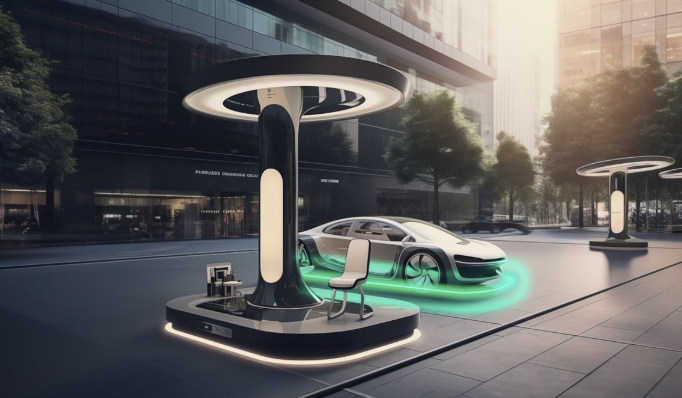
NextNRG and Florida International University are deploying a first-of-its-kind wireless EV charging network on FIU’s Miami campus, combining up to 3 miles of in-road dynamic charging with 24 static wireless pads. The system supports bi-directional power flows, integrating EVs with the campus microgrid and onsite renewables to optimize energy use and bolster grid resilience.
Why this matters
This project represents a critical step beyond plug-based charging toward infrastructure that’s invisible, automated, and grid-interactive. By testing wireless and vehicle-to-grid technologies at campus scale, NextNRG and FIU are de-risking deployment challenges, proving economics, and generating data that will shape future city and corridor rollouts. Universities are uniquely positioned as living labs—controlled environments with diverse use cases, captive fleets, and long-term research commitments.
Key insights
- 3 miles of dynamic in-road charging: Embedded wireless coils allow vehicles to charge while moving, eliminating range anxiety and enabling continuous operation for fleet and transit applications
- 24 static wireless pads: Parked vehicles charge automatically without plugging in—reducing user friction and enabling seamless integration into daily campus operations
- Bi-directional, grid-integrated: EVs don’t just draw power—they feed it back to the microgrid during peak demand or outages, turning vehicles into distributed energy resources
- Real-world testbed: The network will serve university fleets, research vehicles, and campus users, providing operational data on reliability, utilization, and grid impacts before commercial scaling
Our take
Wireless and bi-directional charging have been stuck in pilot purgatory for years—limited by cost, interoperability, and lack of field data. FIU’s deployment changes that. By operating at meaningful scale in a real environment, this project will surface the performance metrics, failure modes, and business model insights that investors and cities need to commit capital. For NextNRG, it’s a validation engine. For FIU, it’s infrastructure that future-proofs the campus while advancing research. And for the industry, it’s a blueprint for how to move from concepts to corridors. If wireless charging is going to break out of niche applications and into mainstream adoption, it will be because projects like this proved the economics work and the technology is ready. This is where that proof gets built.