
IONNA commits $250M to expand fast charging in California
ExecSum
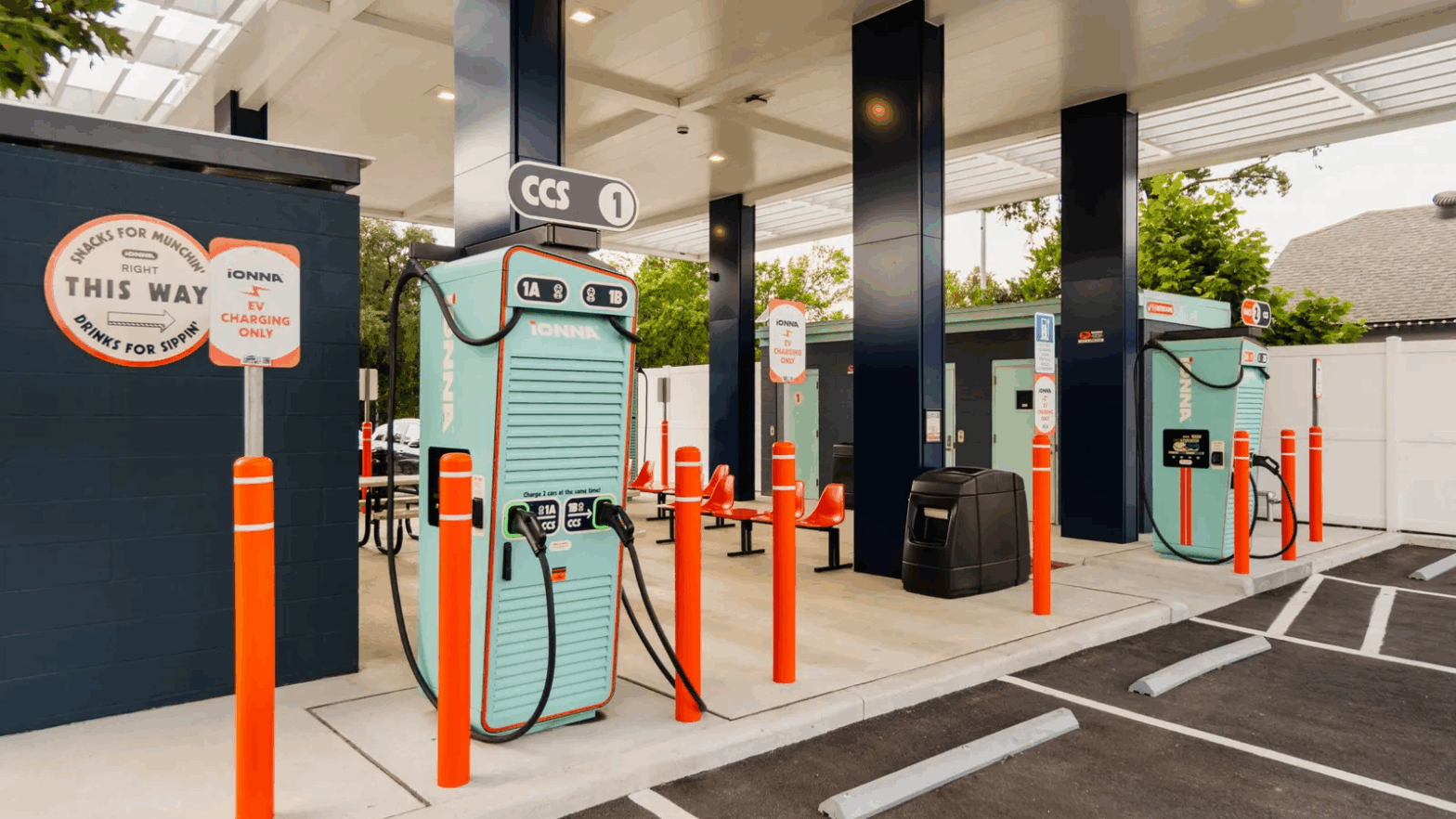
IONNA, the charging joint venture formed by eight global automakers, is committing $250M in private capital over three years to build public fast charging infrastructure across California. The initiative targets up to 1,000 chargers statewide, anchoring a broader 30,000-charger U.S. network planned by 2030. First sites are already operational in San Francisco, Sacramento, San Diego, San Jose, and Westminster under IONNA’s “Rechargery” brand.
Why this matters
Automakers are taking infrastructure into their own hands. Rather than waiting on federal programs like NEVI, IONNA’s backers are using balance sheet capital to solve the charging reliability problem that’s been a barrier to EV adoption. By controlling the full stack—site design, uptime, amenities—they’re creating a direct link between vehicle ownership and charging experience. This is infrastructure as competitive advantage.
Key insights
- $250M privately funded: The California investment comes entirely from IONNA’s eight OEM partners, bypassing federal subsidy timelines and requirements
- 1,000 chargers in California, 30,000 nationally by 2030: California serves as the anchor market for a network designed to blanket high-traffic corridors across the U.S.
- Rechargery sites prioritize experience: Locations include restrooms, food service, and climate-controlled lounges—positioning charging as a service, not just a transaction
- Brand-agnostic architecture: Open to all EVs, the network supports cross-brand interoperability while maintaining premium reliability standards that protect OEM reputations
Our take
IONNA represents a fundamental rewiring of EV infrastructure economics. By self-funding deployment, automakers gain control over the charging experience their customers depend on—and avoid the unpredictability of public programs. This model will pressure legacy charging networks on both reliability and service quality, while creating infrastructure assets with predictable utilization in proven markets. For investors, it’s a signal that the most compelling charging plays may not be pure-play networks, but OEM-backed platforms with embedded demand and operational discipline. California is the testbed. If IONNA executes, expect this playbook to scale nationally.