
IONNA is investing $250M to expand its network in California
ExecSum
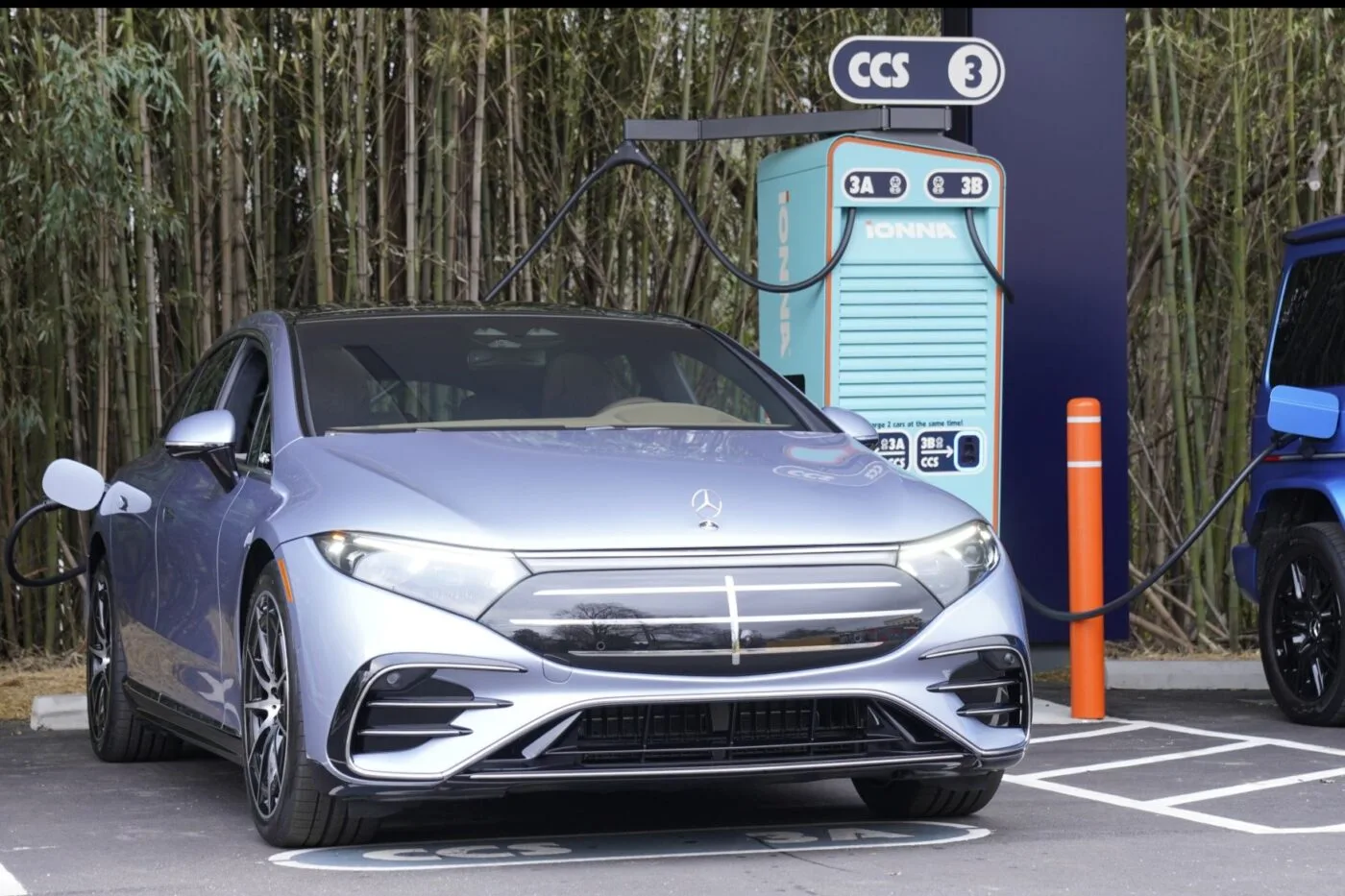
IONNA, the eight-automaker joint venture, has committed $250 million over three years to deploy fast-charging infrastructure across California. This week they opened five locations—San Francisco, Sacramento, San Diego, San Jose, and their flagship “Rechargery Beacon” in Westminster—representing the first wave of over 1,000 charging bays planned for the state. California will account for 25% of IONNA’s 4,000-bay U.S. network, making it the largest single-state commitment in the company’s rollout.
Why This Matters
California represents 29.1% of U.S. EV sales as of Q3 2024, and IONNA is deploying capital where demand already exists rather than speculating on future markets. But the strategic significance goes beyond geography. IONNA launched its first station in March 2024 and now operates 40+ locations nationwide—demonstrating deployment velocity the charging industry hasn’t seen from a new entrant. This isn’t vaporware infrastructure; it’s operational capacity scaling in real time. The California expansion proves automakers can execute fast-charging networks without relying on third-party operators or waiting for policy support.
Key Insights
Plug & Charge Integration: Seven manufacturers now support seamless authentication at IONNA stations—BMW, GM, Hyundai, Kia, Mercedes-Benz, Rivian, and Ford. The remaining founding members (Honda, Stellantis, Toyota) complete integration by end of 2026. This eliminates app friction and payment hassles, making charging feel like refueling rather than a technical process.
Premium Experience Focus: IONNA stations include driver lounges, retail partnerships, and on-site amenities. The Westminster flagship features their “Rechargery Beacon” concept—a testbed for future station design. This addresses charging anxiety not through speed alone but through destination quality.
Education Program: Each new location launch includes partnerships with local dealerships to host EV education events. This targets the adoption gap: new buyers who understand EVs as vehicles but not charging as infrastructure. By co-locating education with hardware, IONNA addresses knowledge barriers at the point of use.
Our Take
IONNA’s California deployment is disciplined capital allocation—they’re building where EV penetration is highest and where ROI timelines are shortest. But the long-term play is network effects. As more automakers integrate Plug & Charge and more locations open, IONNA becomes default infrastructure for multi-brand EV owners. That’s how you build a charging network that competes with Tesla’s Supercharger ecosystem without replicating Tesla’s capital structure. If IONNA can maintain this deployment pace while hitting 97%+ uptime targets, they’ll set the standard for non-Tesla fast charging in North America.