
Suncoast Charging recently opened the first opening the first third-party Tesla Supercharger site in North America
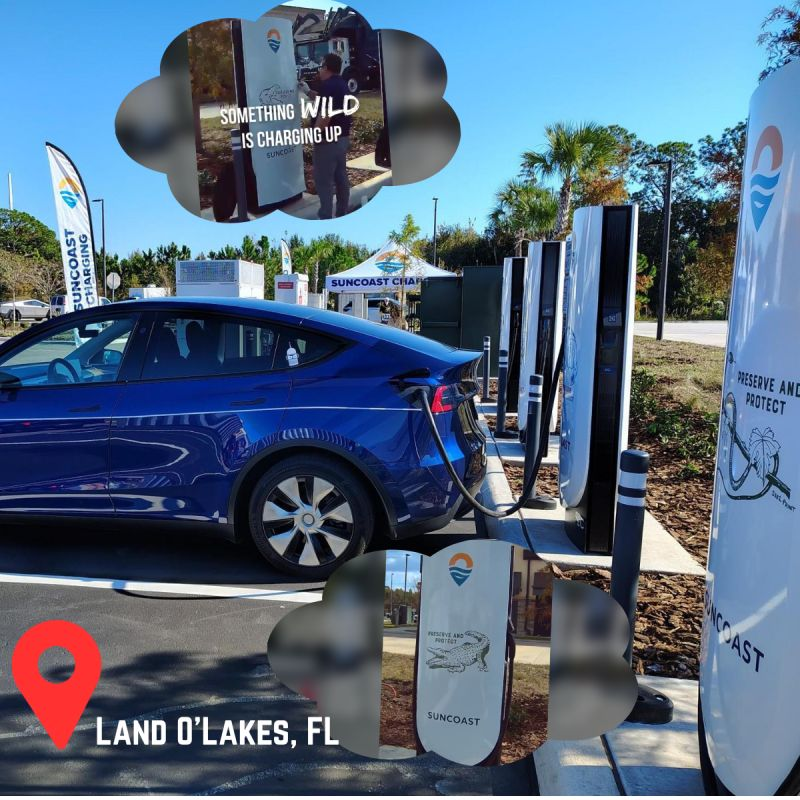
ExecSum
Tesla has opened its first Supercharger for Business location in North America, allowing third-party property owners to install and operate V4 Superchargers on their sites. The hardware delivers up to 500 kW, supports all EVs via NACS and CCS, and includes integrated billing and branding tools. This represents a fundamental shift in Tesla’s infrastructure strategy—from building and owning the network to enabling others to own it while Tesla operates it.
Why This Matters
For years, charging infrastructure has been a capital constraint. Building networks requires massive upfront investment, which has limited deployment speed and geographic reach. By shifting hardware ownership to property owners while maintaining operational control, Tesla solves this without sacrificing reliability or consistency. Businesses get a revenue-generating asset. Tesla gets distributed growth. EV drivers get ubiquitous access. The model accelerates charging deployment at a fraction of Tesla’s previous capital cost.
Key Insights
The Business Model: Third-party owners purchase and install the hardware; Tesla manages software, reliability (97% uptime guarantee), and payment processing. This is genuinely different from traditional franchise models—the owner isn’t buying a brand license, they’re buying charging infrastructure that integrates directly into Tesla’s ecosystem.
Target Markets: Fleets, retailers, hotels, and infrastructure developers can now offer Supercharging as a customer amenity. White-label branding means the chargers can reflect the host business’s identity, creating competitive differentiation.
Technical Foundation: V4 chargers at 500 kW with 3-meter cables, open protocol support (NACS and CCS), and flexible payment structures ensure this works at scale—not just for Tesla owners, but for the entire EV market.
Our Take
Tesla is reframing itself from an infrastructure owner to an infrastructure operator. If this model scales, it solves the core problem holding back EV adoption: availability and reliability. Rather than Tesla capital-funding thousands of new locations, property owners fund the hardware and Tesla funds the operations and software. The result is faster deployment, stronger partnerships, and a charging network that’s distributed but consistent. This is how infrastructure gets built at scale in the modern era.
credit: Steve Birkett and Plug&Share