
Flexis selects AMPECO for depot charging in multi-OEM logistics electrification venture
ExecSum
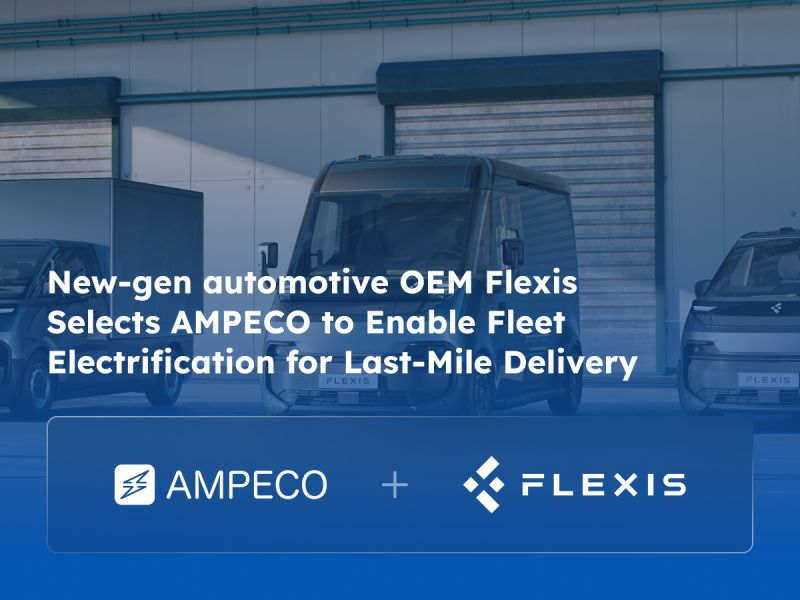
Flexis, a joint venture between Renault Group, Volvo Group, and CMA CGM, has selected AMPECO to power depot charging infrastructure for logistics and last-mile delivery electrification. The partnership integrates vehicles, charging hardware, and software into a unified operational platform.
Why this matters
Fleet electrification fails when charging becomes a bottleneck. Logistics operators need infrastructure that optimizes energy use, prevents downtime, and integrates with existing fleet management systems—not standalone charging stations that operate in isolation. AMPECO’s selection by a multi-OEM venture signals that the industry recognizes software integration as critical infrastructure, not an afterthought.
Key insights
- AMPECO’s platform uses predictive charging management and proactive failure detection to minimize downtime—essential for fleets where every vehicle needs to be operational for daily routes
- Deep vehicle telematics integration provides fleet managers with unified operational oversight, eliminating the need to toggle between charging dashboards and fleet management systems
- Charger-agnostic architecture prevents vendor lock-in and positions fleets to adopt future capabilities like vehicle-to-grid (V2G) and dynamic energy pricing without platform migration
- The solution is fully embedded into Flexis’s operational ecosystem, meaning charging intelligence flows directly into route planning and fleet logistics at scale
Our take
This partnership reflects a fundamental shift in how the industry approaches fleet charging—away from hardware procurement and toward integrated energy management platforms. When three major OEMs back a single charging software provider, they’re acknowledging that interoperability and intelligent energy orchestration matter more than proprietary systems. For logistics operators evaluating electrification, this is the blueprint: charger-agnostic platforms that treat charging as an operational input, not a separate infrastructure problem.